

Table of Contents
The U.S. Department of Education has finalized its Workforce Pell Grant program, a major policy shift expected to expand the talent pipeline for manufacturing and skilled trades industries, including sectors tied to woodworking, panel processing and industrial production.
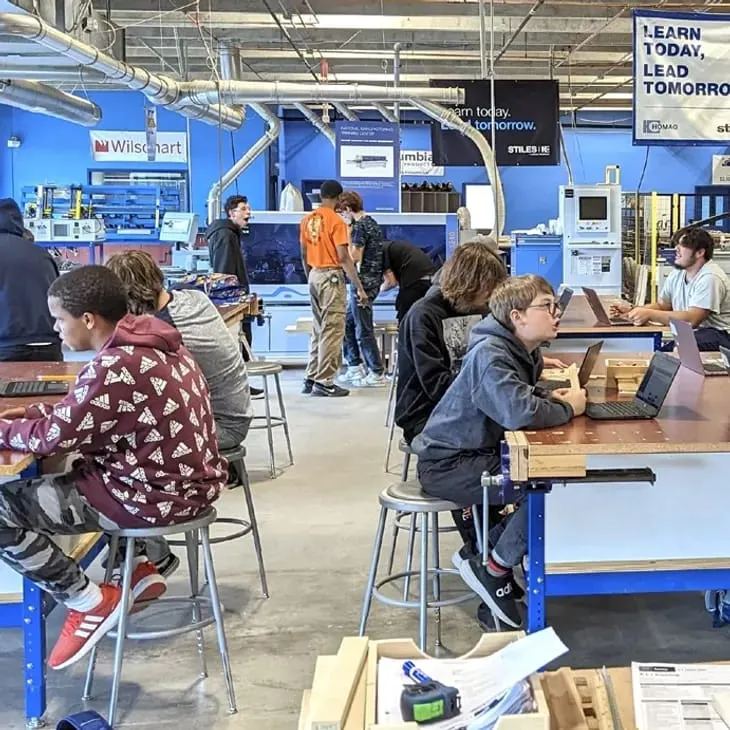
Beginning July 1, 2026, Pell Grants will be available for eligible short-term training programs — some as brief as eight weeks — focused on high-skill, high-wage and in-demand careers. The change opens federal funding to career and technical education (CTE), apprenticeships and credential programs that can prepare workers for roles in CNC machining, automation, cabinetry, materials processing and manufacturing operations.
For the surface and panel industry, where labor shortages persist across production, engineering and technical roles, the program could help accelerate workforce entry and support upskilling initiatives without requiring a traditional four-year degree.
Industry-aligned CTE organizations have long advocated for expanded Pell access to short-term training. In joint comments submitted during the rulemaking process, Association for Career and Technical Education and Advance CTE expressed strong support for the program, emphasizing its role in aligning education with workforce needs.
“CTE sits at the critical intersection of education and workforce development,” the organizations noted, highlighting the importance of programs that build “technical skills and employability competencies that are necessary for postsecondary success and career readiness.”
The groups also underscored that Workforce Pell programs can help connect learners directly to high-demand industries while leveraging existing state workforce systems and accountability frameworks to ensure quality and outcomes.
The program was created under President Donald Trump’s Working Families Tax Cuts Act and is designed to reduce barriers to workforce entry while strengthening domestic talent pipelines.
Under the final rule, participating programs must meet strict requirements tied to completion rates, job placement outcomes and return on investment. Institutions will also be required to align tuition and fees with graduates’ earnings, reinforcing a focus on measurable value.
“The Trump Administration’s postsecondary education agenda is straightforward: we should shift away from high-cost, low-value programs to low-cost, high-value programs,” said U.S. Secretary of Education Linda McMahon. “Americans should not have to spend years in college and take on debt they may never be able to repay before entering the workforce.”
Acting Secretary of Labor Keith Sonderling added that the rule expands access to training models closely tied to employer demand. “This opens doors for Registered Apprenticeships, career and technical education, and targeted-skills training," he said. "Programs that lead to good-paying jobs, fast."
State governors, working with workforce boards, will determine which programs qualify for Workforce Pell funding based on regional labor needs. The rule also allows for interstate agreements, enabling institutions to deliver approved programs across state lines through distance learning—an approach that could expand access to specialized manufacturing and technical training.
ACTE and Advance CTE also stressed the importance of aligning Workforce Pell with existing systems under Perkins V and the Workforce Innovation and Opportunity Act (WIOA), noting that successful implementation will depend on strong coordination between education providers, employers and state agencies.
As manufacturers across the surface and panel sector continue to invest in automation, advanced materials and production efficiency, the Workforce Pell program is expected to play a growing role in building a skilled, job-ready workforce to support that evolution.
The final rule publishes in the Federal Register on May 19, 2026.