
Table of Contents
New research unveiled at High Point Fall Market suggests the traditional boundaries separating kitchen and bath design from the rest of the home are becoming increasingly difficult to define.
The National Kitchen & Bath Association, in partnership with the High Point Market Authority, used its newly reimagined Design Hub at Broad Hall to highlight findings showing substantial crossover between kitchen and bath professionals, interior designers and the broader home furnishings industry.
According to the new Kitchen, Bath and Whole-Home Design Report, 56 percent of NKBA designers already design entire homes, while 74 percent of High Point Market designers design kitchens and 75 percent design baths.
Perhaps even more telling: three in four designers in both groups expect greater collaboration over the next three to five years.
For the Surface & Panel industry, that convergence carries significant implications. As designers work across more rooms, the relationships among cabinetry, decorative surfaces, hardware, lighting, appliances and furnishings become increasingly important — and material and component suppliers have more opportunities to influence the entire home rather than a single application.
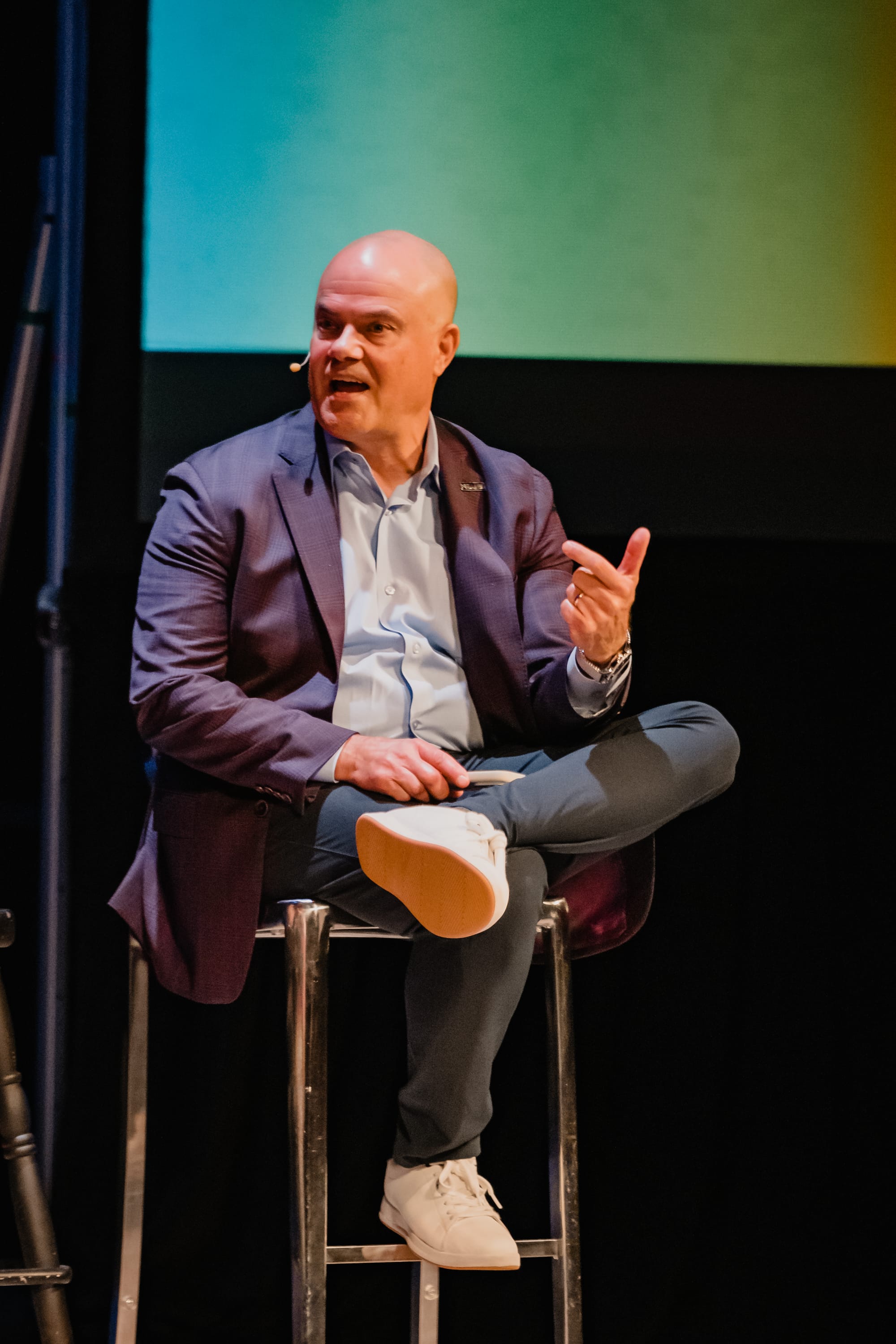
“The kitchen and bath industry has become central to High Point Market, and the whole-home approach is broadening the role of the designer,” said Bill Darcy, global president and CEO of NKBA.
The study found that multi-room and whole-home projects already involve an average of 10 or more types of professionals, underscoring how interconnected residential design and specification have become.
A Show House Built Around Integration
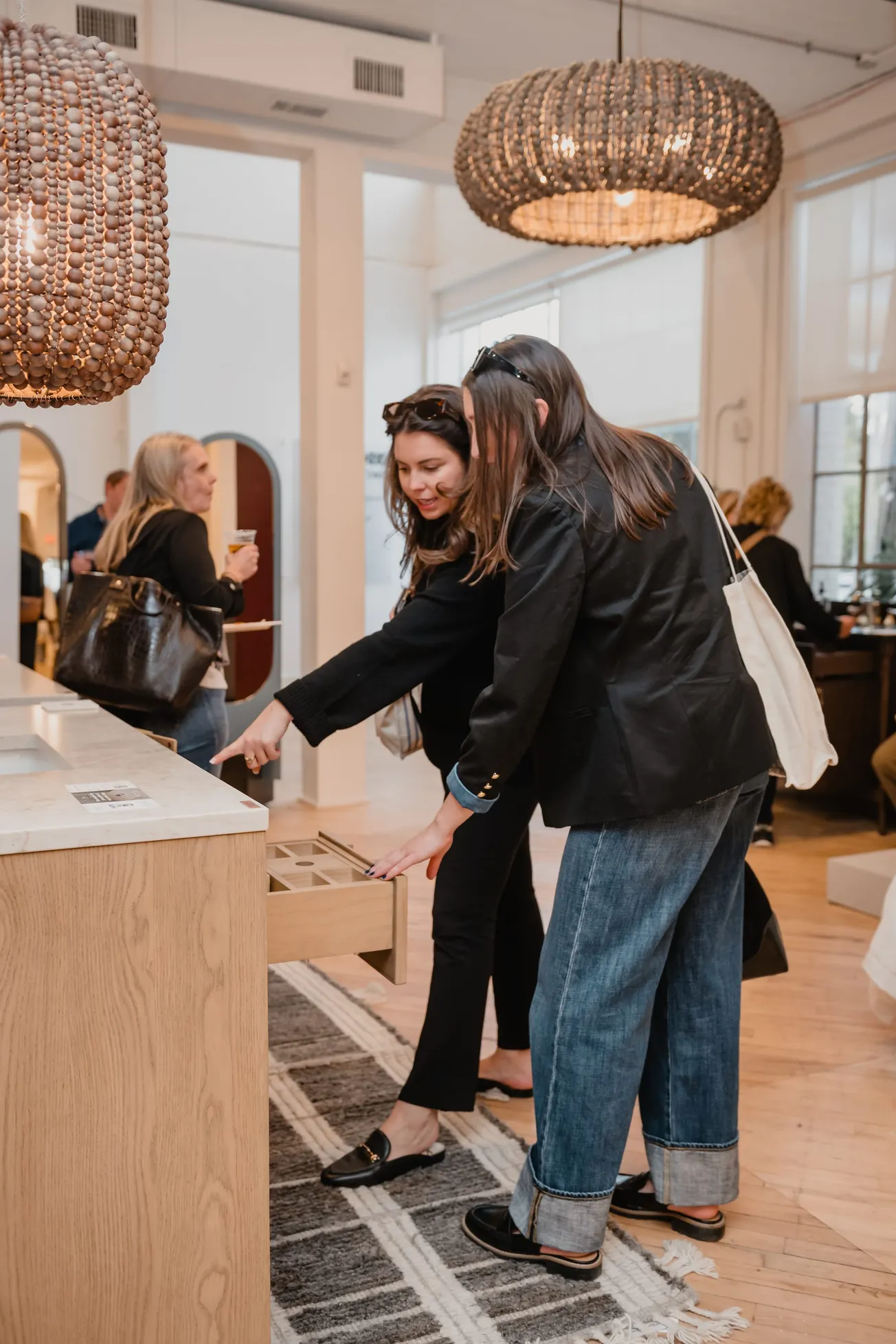
NKBA put that whole-home philosophy into practice at its reimagined Design Hub at Broad Hall, designed by High Point-based Barbour Spangle Design.
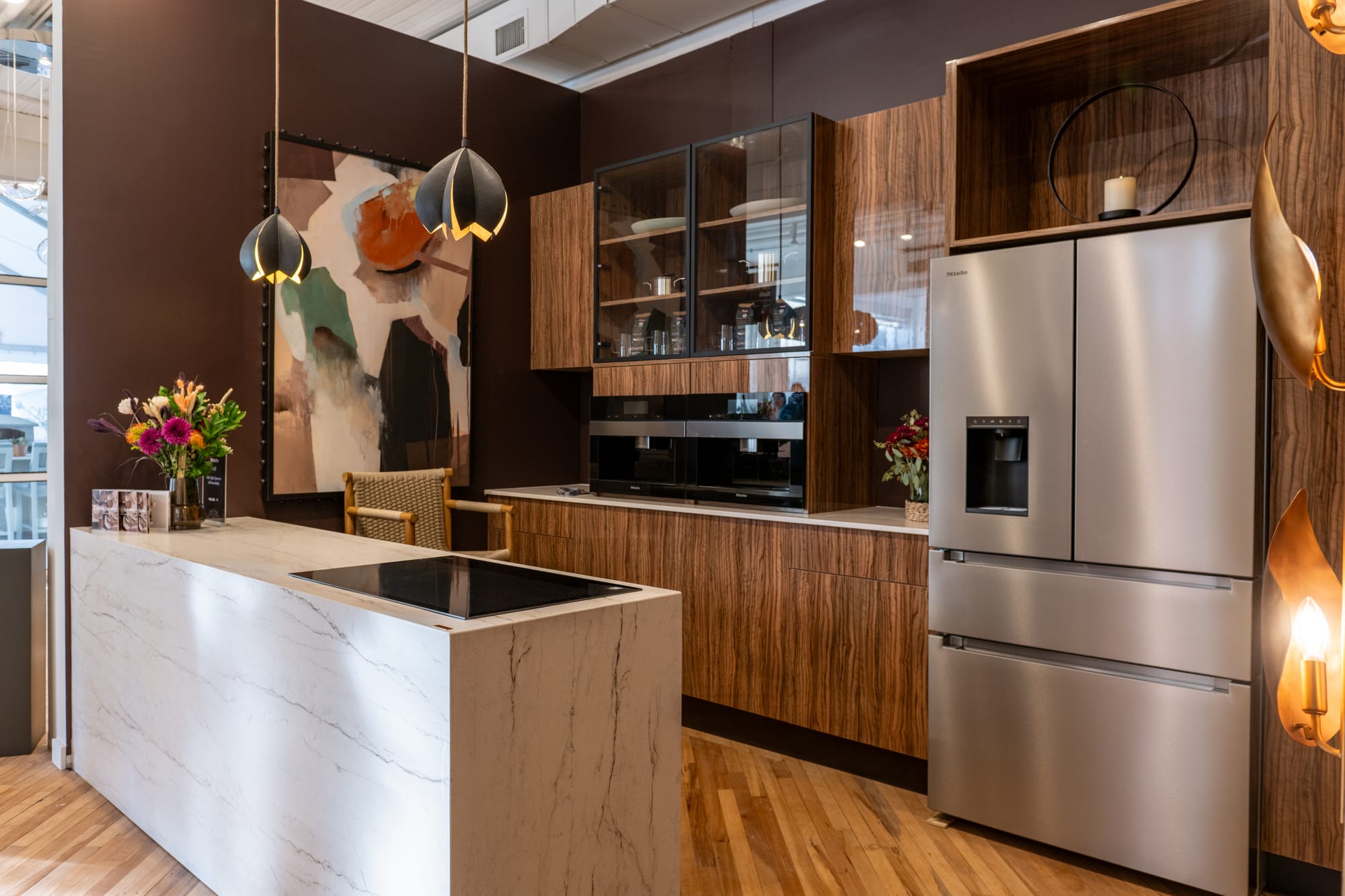
Rather than presenting kitchen and bath products in isolation, the space was conceived as an immersive show house in which cabinetry, surfaces, appliances, hardware, lighting, color and furnishings worked together throughout a residential environment.
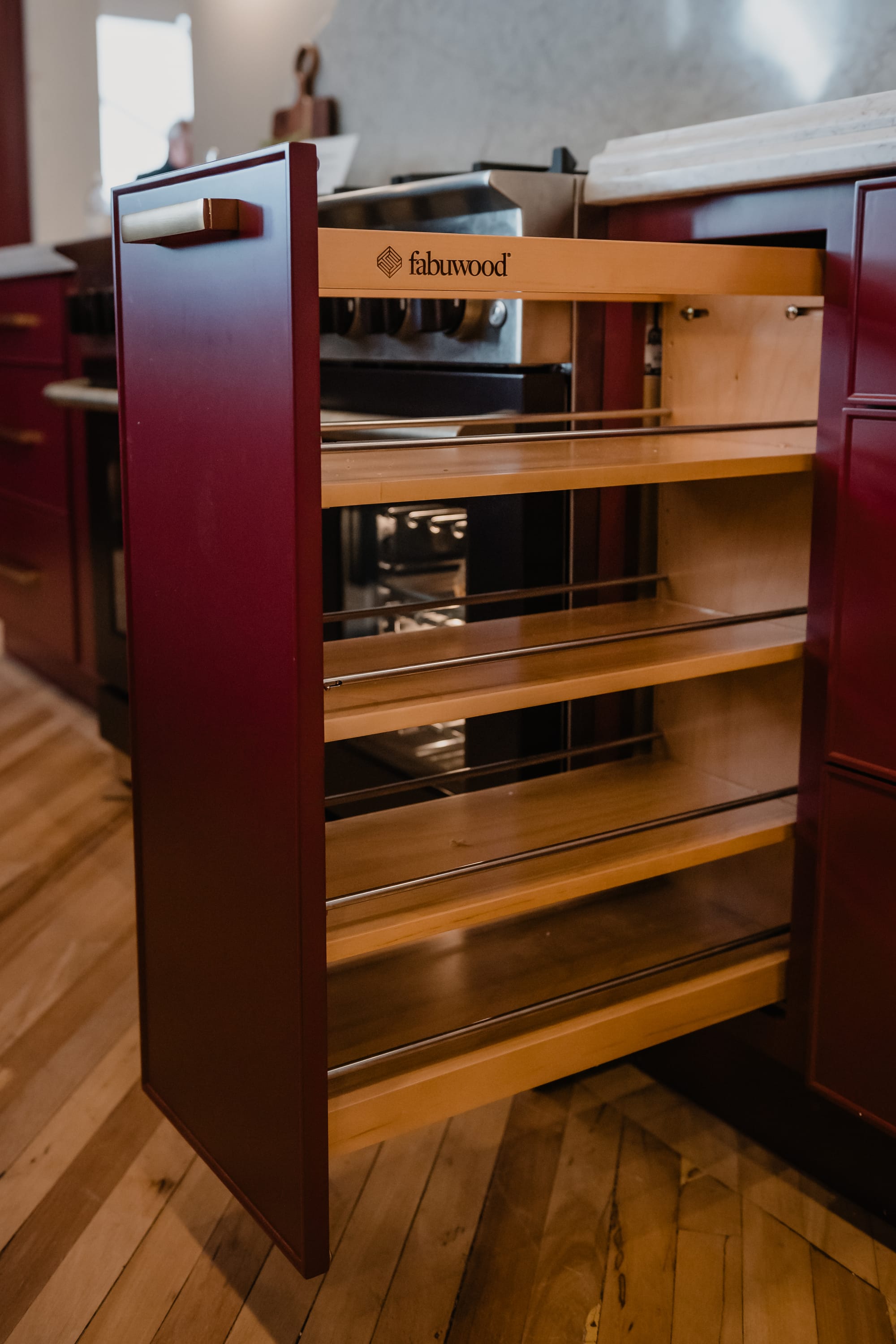
The kitchen featured Fabuwood cabinetry, including concealed elements such as a hidden pantry, alongside an integrated BlueStar appliance wall.
Dedicated entertaining and work zones extended the kitchen concept further. A speakeasy-inspired space incorporated metallic Newport Brass fixtures, while an espresso bar and scullery used Miele appliances to illustrate growing interest in specialized beverage stations and task-oriented zones.
A designated wet bar paired BLANCO fixtures with colorful refrigeration from True Caliber.
Surfaces from Cosentino appeared throughout the Design Hub, alongside lighting from Maxim Lighting and Kichler and color from Sherwin-Williams.
The same approach carried beyond the kitchen.
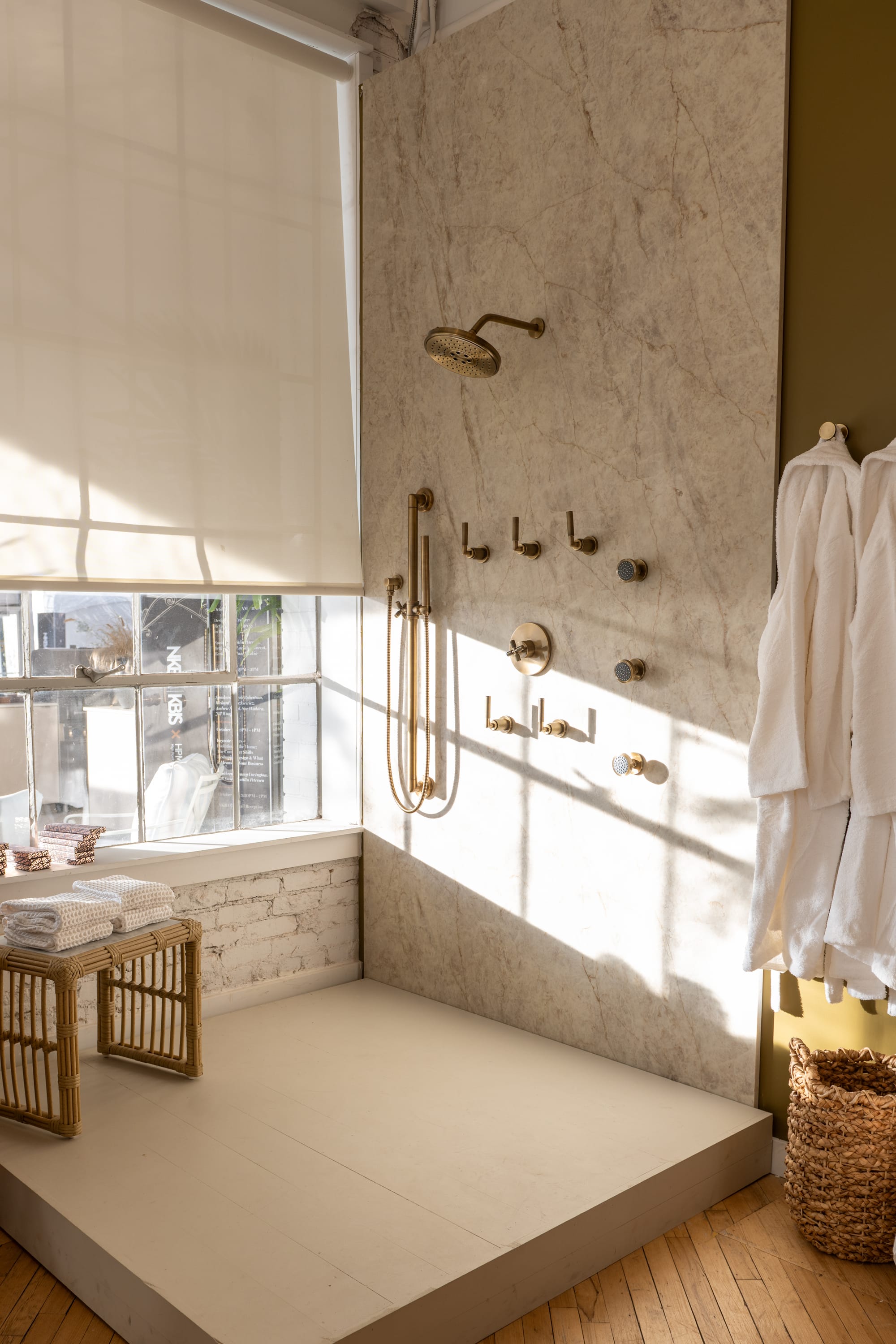
A wellness-oriented bath used James Martin Vanities and Newport Brass shower fixtures to illustrate the continued transformation of bathrooms into spa-like retreats, while an elevated utility area featuring BLANCO, Cabinet Joint, Kichler and LG Signature treated the laundry room as a designed environment rather than a purely functional back-of-house space.
Even the outdoor area became part of the whole-home story, with kitchens from Kalamazoo, Urban Bonfire and True Caliber integrated with Brown Jordan furnishings.
What Kitchens Could Look Like in 2027
NKBA also used High Point Market to unpack findings from its newly released 2027 Kitchen Trends Report.
Among the themes discussed during the weekend were kitchens becoming increasingly personalized, functional and purpose-built.
Panels explored how lighting can influence mood and well-being, how color and personality can make kitchens feel more customized, and why functionality itself is increasingly viewed as a form of luxury.
Designers also examined the continued evolution of prep, cooking and cleanup zones as traditional kitchen layouts give way to spaces tailored more precisely to the way homeowners live.
“The Purpose-Built Kitchen,” reimagined layouts and personal uses of color emerged as notable directions for 2027.

During a “Cocktails and Conversation” event, members of NKBA’s 2026 Design Council — Bobby Berk, Mandy Cheng and Nathan Orsman — explored choices ranging from mixed metals to open shelving while emphasizing that trend forecasts are tools rather than rules.
The broader direction was toward kitchens and baths functioning as increasingly individualized workrooms rather than standardized spaces.
The Whole Home Becomes the Opportunity
That shift may be especially significant for companies serving the surface, panel and component industries.
As kitchen and bath designers move further into whole-home projects — and interior designers move deeper into kitchens and baths — products once marketed primarily for a specific room have opportunities to appear across multiple spaces.
Cabinetry can extend into bars, laundry rooms and living spaces. Decorative surfaces can connect kitchens with adjoining interiors. Hardware and lighting can create continuity across cabinetry, furniture and architectural applications.
The research suggests those cross-category relationships are likely to become even more important.
Rather than designing a kitchen, bath or living room as an isolated environment, the emerging model asks manufacturers, designers and suppliers to think about how materials and components contribute to an interconnected home.
NKBA will return to Broad Hall for High Point Spring Market, April 10–14, 2027. The organization’s 2027 Kitchen Trends Report and Kitchen, Bath and Whole-Home Design Report are available through NKBA.