
Table of Contents
Large-format ceramic surfaces are moving beyond their traditional role as countertops and cladding — and Laminam is using SICAM 2026 to demonstrate just how far they can go.
At the furniture components show in Pordenone, Italy, Laminam is showcasing éxo, a modular concept kitchen designed by Andrea Federici that uses material, hardware and integrated functionality to rethink the relationship between surfaces and the spaces they define.
The concept accompanies an expansion of Laminam’s RARE collection, but for the Surface & Panel audience, the larger story is how those materials are being incorporated into a complete system rather than simply presented as decorative finishes.
Surface Becomes Architecture
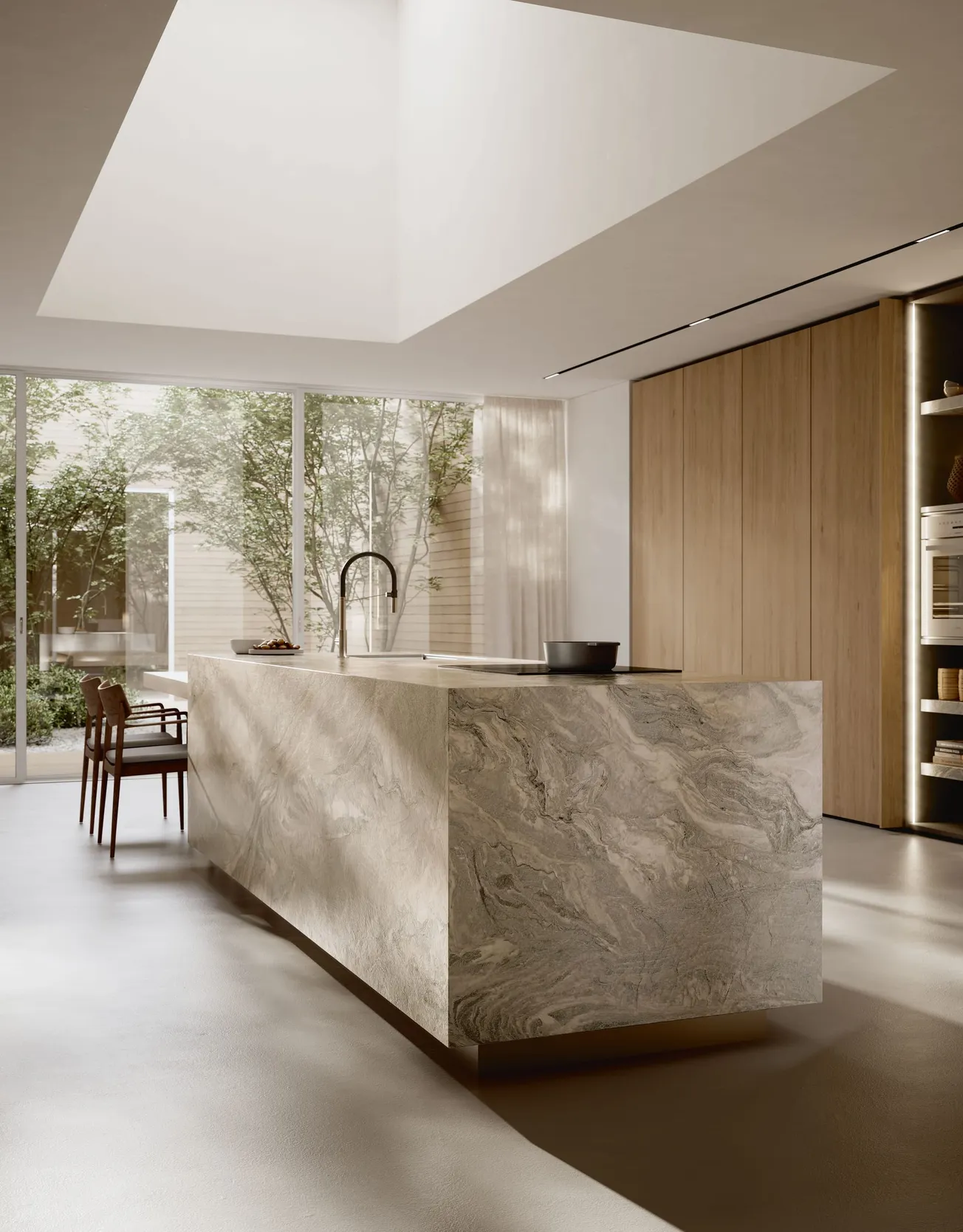
Designed as a source of inspiration for fabricators and designers, éxo consists of three standalone, repeatable modules clad in Pietra di Gré from Laminam’s RARE collection.
Each module addresses a different kitchen function, including washing, cooking, food preparation, storage, organization and casual dining. Because the modules can operate independently, they may be grouped together or separated, allowing the kitchen to adapt to indoor, outdoor and transitional living spaces.
That flexibility gives the surface material a more architectural role. Instead of simply finishing cabinetry or a countertop, Laminam's ceramic becomes part of the visual and structural language defining each volume.
Illuminated horizontal sections further change the perception of the modules by visually minimizing the base and groove, creating the appearance that the countertop and base are floating. The result is a kitchen that Laminam describes as having an almost sculptural presence.
Texture Moves to the Forefront
Material tactility is also a major theme in Laminam’s expanded RARE collection.
New Pietra di Gré Ruggine combines oxidation-inspired tones with an irregular texture, while additions including Calacatta Rosa and Rosso Lepanto introduce more expressive color and veining. Laminam is also expanding use of its Rain finish, which creates subtle bas-relief engravings inspired by moving water.
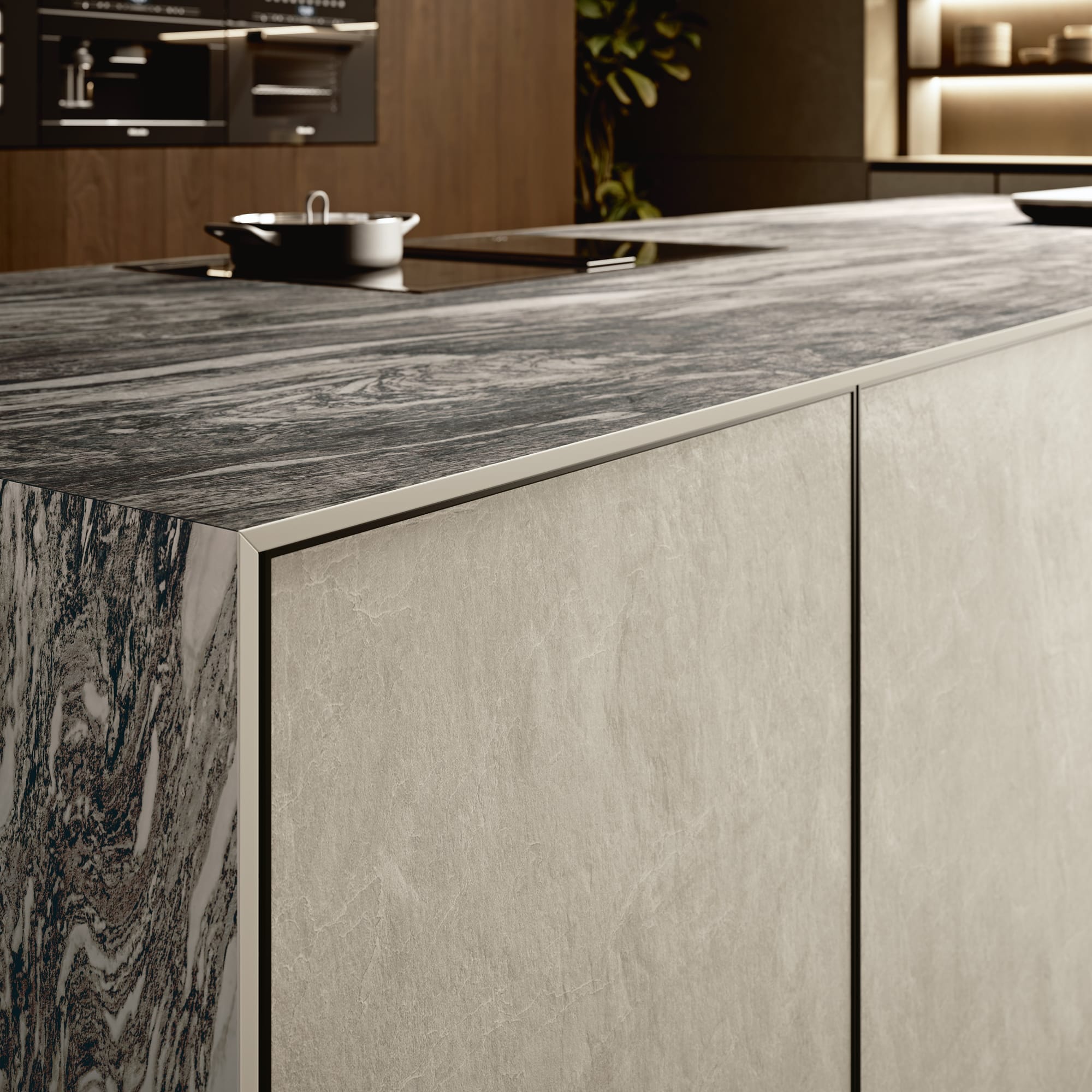
In the éxo kitchen, Pietra di Gré uses Laminam's DNA finish, which follows the natural pattern of the stone-inspired surface with physical relief. The raised texture interacts with light to emphasize depth while making the pattern perceptible to both sight and touch.
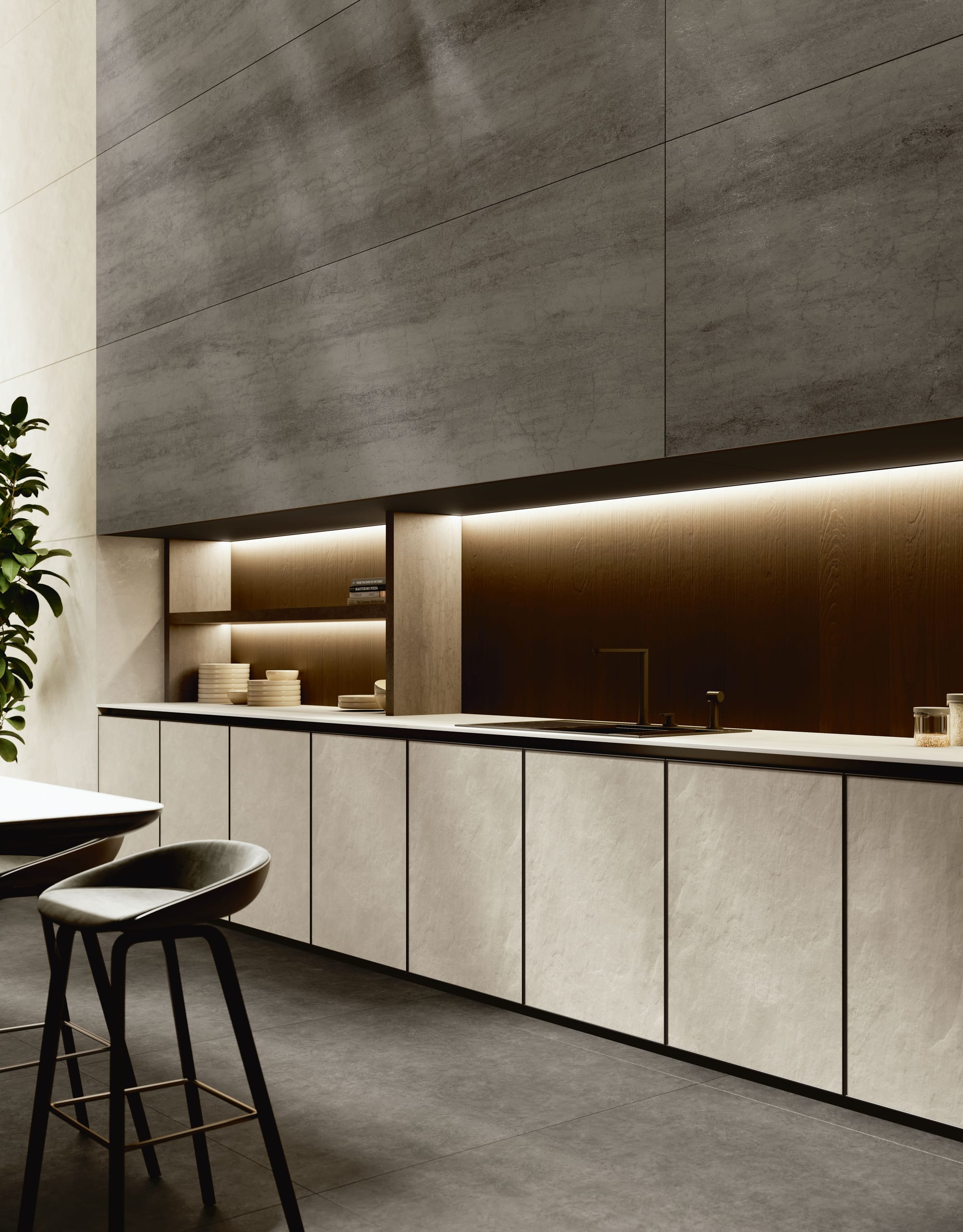
A contrasting Amazzonia surface from the Slate collection appears in the sink and chopping board. Those elements use slabs from the twO by Laminam range, which measures just 2 mm thick. Laminam says the reduced thickness provides additional flexibility and ease of cutting, expanding the potential for detailed applications.
Surfaces Meet Hardware and Components
The concept also illustrates something familiar to the S&P market: creating a finished interior increasingly depends on the integration of surfaces with hardware and functional components.
Federici worked with several industry suppliers to bring éxo from concept to working kitchen. Hettich supplied runners and internal drawers; Kesseböhmer provided internal fittings; Häfele contributed the socket tower; PITT cooking supplied the hob; Project Group provided the sink mixer; and Jein by Zambetti supplied outdoor fabric cladding.
The combination turns éxo into more than a showcase for ceramic slabs. It offers an example of how surface manufacturers, hardware suppliers, component specialists and fabricators can work together to make materials an increasingly integrated part of furniture and interior systems.
Laminam is presenting éxo and the expanded RARE collection at SICAM 2026, Oct. 20–23, in Hall 1, Stand C28.